

 فارسی
Wax Emulsion
suggests
Don’t see the Emulsion you’re looking for? We make several Emulsion that are not listed here.
Connect To KhavaranParaffin


Wax Emulsion
What Is Wax Emulsion
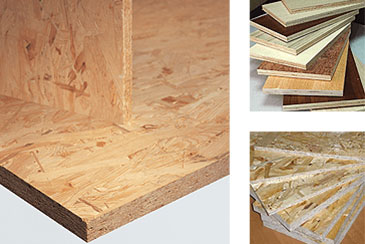
Wax emulsion is used in woodworking industry to protect wood boards (Particle Board, MDF, OSB) from water. Wax emulsion has anti-dust effect which is important during sawing and sanding. Evaluate surface finish and sanding performance in the actual production process; results depend on the grade, dosage and processing conditions.
Confirm particle-size distribution against the selected grade TDS and evaluate dispersion and water repellency in the intended wood-panel process.
Grade Selection and Process Compatibility
Khavaran Paraffin supplies wax emulsion for industrial formulations and wood-panel production. Select the grade according to the substrate, resin system, dosing equipment and processing conditions. Request a sample and the current grade TDS before placing a bulk order.
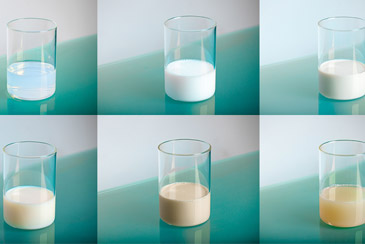
Packing
At our production centre we have the flexibility to filter and add to the products to cater for customer requirements.
Wax emulsion can be supplied in bulk and/or brand new iron drums.
Wax Emulsion in Wood-Panel Production

Moisture Resistance
Helps protect MDF, OSB and particleboard against moisture.
Smoother Surface
Supports a smoother panel finish and improved surface quality.
Controlled Application
Liquid delivery supports accurate and consistent processing.
Cleaner Handling
Designed for practical storage, transfer and production use.
APPLICATION
Wax emulsions are used in the manufacture of paper, paperboard and boxboard. They are used in the production of insulating board, curing, hardboard and particleboard in the building products industry. They are used in woodworking industry to protect wood boards (Particle Board, MDF, OSB) from water. Wax emulsion has anti-dust effect which is important during sawing and sanding.
Evaluate water absorption, thickness swelling, surface finish and dust generation in the actual production process. Performance depends on the selected grade, dosage, resin compatibility and pressing conditions. Confirm particle size and other numerical specifications against the grade TDS rather than applying one value to all wax emulsions.
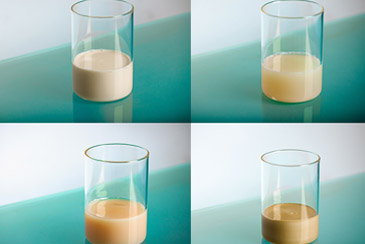
Quality Control
Agree the grade specifications, test methods and acceptance limits before ordering. Request the relevant TDS, product-specific SDS and shipment COA. The archived paraffin wax safety sheet does not identify the supplied emulsion grade. Request its current SDS before handling or shipment.
Confirm the agreed wax-emulsion specification and batch COA before shipment. Independent inspection of quality and quantity can be discussed before production or loading, subject to agreement.
Wax Emulsion: Process Evaluation
- Confirm particle-size distribution against the selected grade TDS and evaluate dispersion and water repellency in the intended wood-panel process.
- Evaluate compatibility with melamine- or urea-based resin systems using the actual formulation and pressing conditions. Confirm emulsion stability, water absorption and thickness swelling in production trials.
- Simple application method because wax emulsion is supplied as a liquid.
- Storage requirements and costs depend on the grade and installation. Follow the grade TDS for storage temperature and freeze protection.
- Evaluate transfer temperature, pumping and pipework requirements for the selected grade; confirm freeze protection and cleaning procedures.
- Assess handling hazards using the current product-specific SDS and site procedures. Water-based delivery does not establish that a product or process is free of fire, burn or other handling risks.
- Any change in resin dosage requires production trials and validation of the finished board properties against the applicable specification.
Wax Emulsion
Grade WE reference data: The values below reproduce the linked wax-emulsion TDS and are typical reference values, not batch acceptance limits. The source labels 53 ± 1 WT% as “OIL CONTENT”; confirm the intended definition, test methods and agreed specification before ordering. Request the current grade TDS and batch COA.
| Characteristic | Unit | Published typical value |
|---|---|---|
| Appearance | — | Yellow-white liquid, without mechanical inclusions |
| Acidity | pH | 5–9 |
| Brookfield viscosity at 20°C | mPa·s | 50–400 |
| OIL CONTENT (label as published) | WT% | 53 ± 1 |
| Oil fraction flash point, minimum | °C | 280 |
| Density at 20°C | g/sm3 (as published) | 0.93–0.97 |
| Solubility in water | — | Published as “without limits”; confirm water quality and dilution procedure |
| Type | — | Anionic and nonionic emulsion |
| Centrifugal stability | — | Without splitting |
| Glue and resin compatibility | — | Good (qualitative reference; validate in the actual resin system) |
| Stability while pumping | — | Good (qualitative reference; validate with the actual equipment) |
Gallery


